
How to Help Someone With Low Vision Without Taking Over
Learn how to help someone with low vision while respecting their independence. Practical advice for families on communication, lighting, accessibility, and everyday support.
Practical, independent guidance
Clear information about everyday strategies, accessibility tools, and the choices that can help you stay independent.
Choose what you need
Learn how to help someone with low vision while respecting their independence. Practical advice for families on communication, lighting, accessibility, and everyday support.

A high-quality magnifier or a bright electronic screen can only perform well if it is clean. Dust, fingerprints, and smudges can interfere with image clarity, increase distracting reflections, and make reading or detailed viewing more difficult. However, reaching for the nearest paper towel or household glass cleaner is a

Reading a prescription bottle is one of the most critical daily tasks for anyone managing their health, yet it is also one of the most difficult. Medication labels feature tiny print, dense medical information, and a fundamentally challenging shape: a tight curve. When it comes to taking the correct dosage

Often, when reading or detailed work becomes difficult, the first instinct is to look for a stronger magnifier. But in many cases, improving the lighting may make a task easier without increasing magnification. Proper illumination can make text pop, enhance contrast, and reduce eye strain. However, incorporating lighting directly into
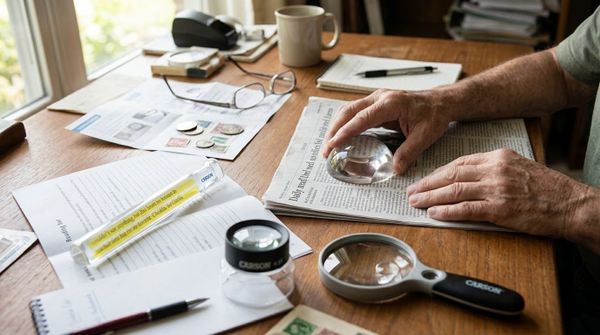
When everyday tasks like reading or hobbies become difficult, it is natural to reach for the strongest magnifier available. However, a higher magnification level is not always the best solution. While a stronger lens enlarges text more, it can actually make a task harder if it isn't the
A comparison of published toaster features and tactile adaptations for low vision. These products have not been hands-on tested by Low Vision Guide.
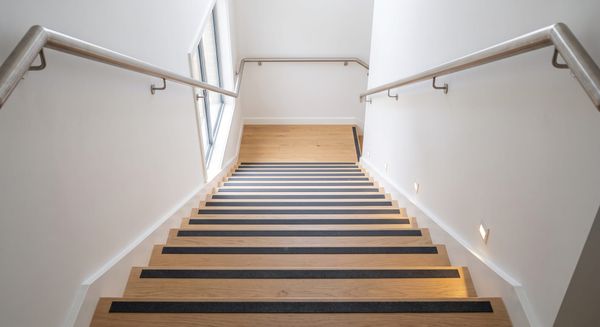
A practical, room-by-room guide to home safety for individuals with low vision. Learn how to address lighting, contrast, stairs, and everyday fall hazards.
Affordable, practical tools and strategies that may make everyday reading, cooking, writing, medication management, and computer use easier with low vision.
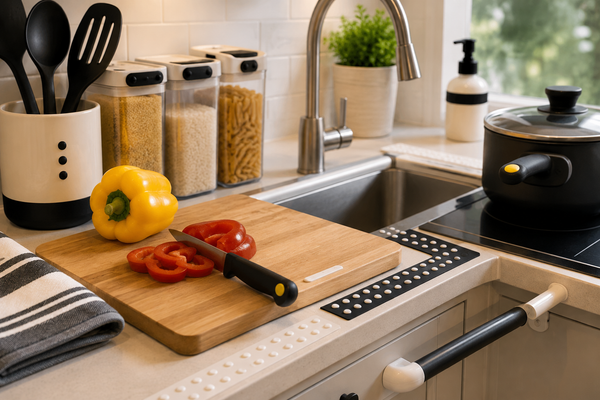
Practical ways to make food preparation easier with low vision using contrast, tactile markers, better lighting, organization, and accessible kitchen tools.
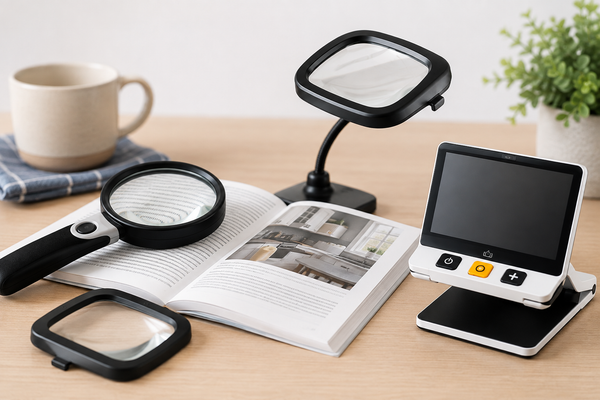
Learn how magnifier strength, diopters, working distance, and field of view work together—and how to choose practical magnification for reading and everyday tasks.
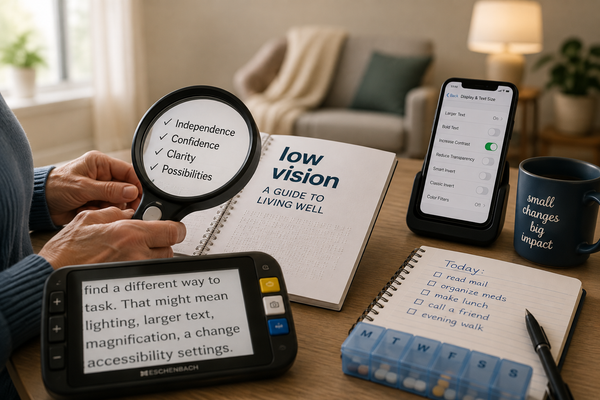
What comes after a low vision diagnosis: everyday adaptations, environmental changes, technology, and the rehabilitation professionals who can help.
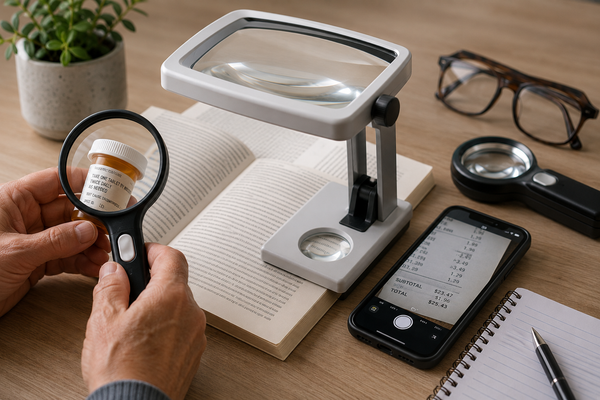
A technical companion guide to magnifier power (diopters), working distance, and field of view — the optics behind choosing the right form factor.
Why trust this guide?
Our recommendations reflect independent judgment. Sponsors never preview, edit, or approve our work.
Read our Editorial Independence Charter